
India’s animation, visual effects, and gaming industry has grown steadily, driven by demand from films, streaming platforms, advertising, and interactive media. As more students consider careers in creative technology, selecting the right institute becomes a key decision that directly influences both skill development and long-term job opportunities.
The AVGC (Animation, Visual Effects, Gaming, and Comics) sector in India is expected to expand significantly, creating strong demand for trained professionals across multiple creative roles. This growth makes it important for students to choose institutes that offer practical exposure and industry-relevant training.
For students beginning their research, exploring options such as the top animation institute in India can provide a useful starting point before diving deeper into individual institute features and offerings.
In this blog, you’ll find a structured breakdown of what defines career-focused animation institutes in India and how to evaluate them effectively based on your goals.
Understanding the Growth of Animation Careers in India
Animation today is no longer restricted to films and television. It plays a growing role in several industries that rely on visual storytelling and digital experiences.
These include:
- Gaming and esports
- Advertising and digital marketing
- E-learning and educational content
- Architecture and product visualisation
As digital content consumption continues to increase, companies are investing more in animation and visual design. This has opened up a wide range of career opportunities for students who combine creativity with technical skills.
Some of the most in-demand roles include:
- 2D and 3D animators
- VFX artists
- Game designers
- Motion graphics designers
A strong educational foundation helps students build the confidence and practical knowledge required to succeed in these roles.
What Makes an Animation Institute Career-Focused?
Not all animation institutes offer the same level of training or career preparation. Career-focused institutes go beyond basic teaching and prioritise employability, real-world exposure, and skill development.
Here are the key features that define such institutes:
1. Updated and industry-aligned curriculum
The curriculum should reflect current industry needs rather than outdated concepts.
It should include:
- Animation fundamentals and storytelling
- 3D modelling and rigging
- Visual effects and compositing
- Game design basics
- Motion graphics
Institutes that regularly update their curriculum ensure students stay relevant and prepared for evolving industry demands.
2. Hands-on project-based learning
Animation is a practical field where skills improve through consistent practice and application.
Top institutes emphasise:
- Real-world project assignments
- Portfolio-based learning
- Collaborative team projects
- Simulation of studio workflows
Working on projects helps students understand production processes and develop problem-solving abilities.
3. Access to professional tools and software
Students must be trained using the same tools that are used in professional studios.
Important software includes:
- Autodesk Maya
- Blender
- Adobe After Effects
- Nuke
- ZBrush
Institutes that provide access to licensed software and high-performance systems help students build industry-ready technical skills.
4. Faculty with real industry experience
Faculty members play a major role in shaping a student’s learning journey.
Experienced instructors:
- Bring real-world insights from industry projects
- Understand production workflows
- Offer practical guidance beyond theory
Learning from professionals helps students gain a clearer understanding of industry expectations.
5. Internship opportunities and industry exposure
Internships provide valuable experience and help students transition into professional environments.
Career-focused institutes:
- Collaborate with studios and production houses
- Offer structured internship programmes
- Organise workshops and masterclasses
These opportunities allow students to apply their skills in real-world scenarios and build industry connections.
6. Placement support and career guidance
Placement support is an important factor for students investing time and money in animation education.
Strong institutes provide:
- Portfolio reviews and feedback
- Resume building support
- Interview preparation
- Industry connections for placements
According to Statista, the global animation market is projected to grow significantly in the coming years, reflecting increasing demand for skilled professionals worldwide. Institutes that align their training with these trends improve student employability.
Popular Courses Offered by Animation Institutes
Students can choose from different types of courses based on their career goals and learning preferences.
1. Degree programmes
These programmes offer comprehensive training over three to four years.
They cover:
- Art and design fundamentals
- Animation principles
- Advanced software training
- Project-based learning
They are suitable for students looking for in-depth knowledge and long-term career growth.
2. Diploma courses
Diploma programmes are shorter and more focused.
They typically include:
- Core animation skills
- Software training
- Portfolio development
These are ideal for students who want to enter the industry quickly.
3. Specialised certification courses
These courses focus on specific skill areas such as:
- VFX compositing
- 3D modelling
- Game design
They are useful for skill enhancement or career transitions.
How to Evaluate Animation Institutes Effectively
Choosing the right institute requires careful evaluation beyond marketing claims. Students should consider:
- Academic credibility: Check whether the institute is recognised by universities or accrediting bodies and follows a structured course design.
- Student outcomes: Review awards, competition participation, and the overall quality of student portfolios.
- Alumni success: Look for graduates working in reputed studios or contributing to major projects.
- Industry connections: Evaluate partnerships with studios and the availability of internship opportunities.
These factors provide a clearer picture of long-term value.
Infrastructure and Learning Environment
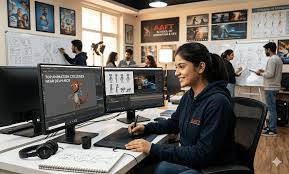
The quality of infrastructure plays an important role in shaping the learning experience. Students should look for:
- High-performance computer labs
- Dedicated animation and VFX studios
- Access to digital learning resources
- Comfortable and collaborative learning spaces
A well-equipped environment allows students to practise effectively and explore their creativity.
Cost and Return on Investment
Animation courses can vary significantly in cost depending on the institute and programme.
Students should:
- Compare fees across different institutes
- Check for scholarships or financial aid
- Evaluate long-term return on investment
Choosing the right institute involves balancing affordability with quality education and career opportunities.
Importance of Building a Strong Portfolio
A strong portfolio is one of the most important factors in securing a job in animation.
Good institutes support students by helping them:
- Build diverse and high-quality projects
- Showcase both creativity and technical skills
- Develop a unique artistic style
- Receive regular feedback and improvement guidance
A well-developed portfolio demonstrates real skills and often carries more weight than academic qualifications.
Common Mistakes Students Should Avoid
Students often make decisions without proper research or understanding.
Avoid:
- Choosing institutes based only on fees
- Ignoring placement records
- Overlooking faculty experience
- Not reviewing the course curriculum
- Skipping comparisons between institutes
Careful evaluation helps students make informed decisions.
Tips for Students from Non-Metro Cities
Students from smaller cities may face challenges such as limited access to specialised institutes.
Helpful steps include:
- Exploring institutes in cities like Mumbai, Pune, and Bangalore
- Planning for relocation and living expenses
- Attending local workshops or short-term courses
- Exploring online learning options
With proper planning, students can access quality education regardless of location.
Balancing Creativity and Technical Skills
Success in animation requires both artistic creativity and technical expertise. Students should focus on:
- Understanding animation principles
- Learning industry-standard tools
- Practising storytelling techniques
- Working on real-world projects
Institutes that balance both aspects prepare students for diverse career opportunities.
Final Thoughts
Choosing the right animation institute plays a crucial role in shaping a successful career in animation, VFX, or gaming. Students should prioritise curriculum quality, practical learning, faculty experience, industry exposure, infrastructure, and placement support when making a decision.
By carefully evaluating different options and selecting institutes that emphasise hands-on training and portfolio development, students can build the skills required to succeed in a competitive and rapidly growing industry.
